Peoria · East Peoria · Pekin · Morton
Foundation repair for homes across the Peoria, IL area
Stair-step cracks, a floor that slopes, doors that stick, a basement that gets damp after every heavy rain — these are foundation problems, and they get more expensive the longer they sit.
What we repair
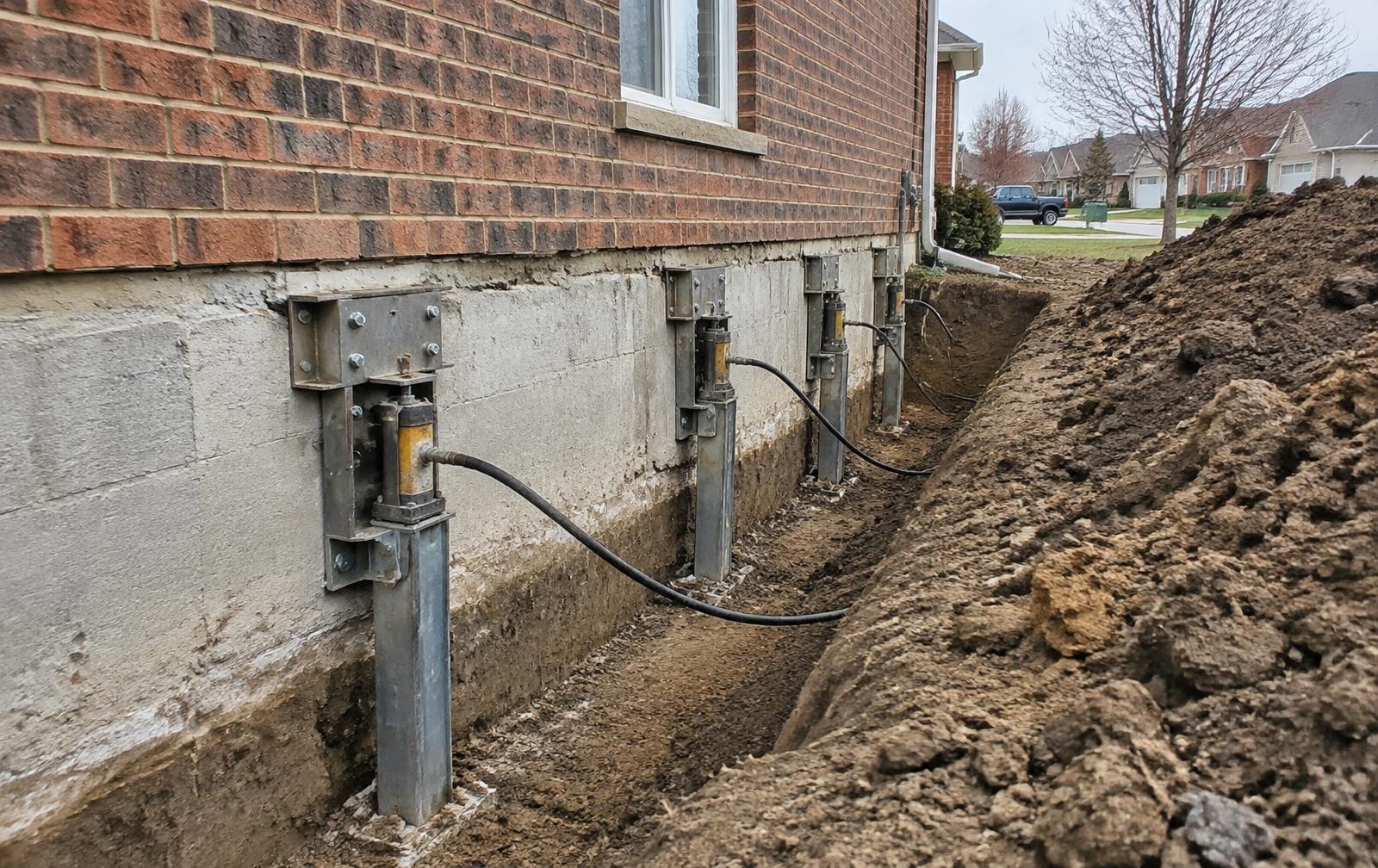
Foundation settling & pier support
Steel or concrete piers carry the load of a settling footing down to stable soil so the structure stops moving.
Bowing & cracked basement walls
Lateral pressure from saturated clay pushes block and poured walls inward. Bracing and anchoring hold the wall in line.
Crack repair & seepage control
Injection and exterior detailing seal active cracks so water stops tracking into the basement after storms.
Interior drainage & sump systems
Drain tile and a properly sized sump pump move groundwater out before it reaches the slab.
Crawl space support & moisture
Adjustable supports, vapor barrier, and drainage work together to firm up sagging floors above crawl spaces.
Concrete slab & stoop lifting
Voids under garage floors, walks, and patios are filled and the slab is brought back to grade.
Why foundations move here
Central Illinois sits on deep glacial and loess soils that hold a lot of water. Through a normal year those soils swell in a wet spring, shrink in an August dry spell, then freeze and heave over winter. Every cycle puts pressure on footings and basement walls, and homes built on fill, near a bluff, or with poor surface drainage feel it first.
The result is rarely dramatic. A hairline crack widens a little each year, a basement corner starts to smell damp, a bedroom door needs a shove. Because the change is slow, most homeowners wait — and the repair grows from underpinning one corner to stabilizing a full wall.
Our approach is to look at the whole picture before recommending anything: elevations inside the house, crack patterns and direction, grading and downspouts outside, and whether water has a path away from the structure. Sometimes the fix is drainage. Sometimes it is structural. We tell you which.
Stair-step cracks in block
Diagonal cracks following mortar joints usually mean one part of the footing has dropped.
Doors and windows binding
Openings that used to work and now stick are a sign the frame is out of square.
Gaps at trim and ceilings
Separation where baseboard meets floor or crown meets ceiling tracks with movement below.
Water at the wall-floor joint
Seepage after storms points to hydrostatic pressure and a missing drainage path.
How the process works
1. Tell us what you see
Send photos and a short description through the form.
2. On-site inspection
We measure, look outside and in, and find the cause.
3. Written scope
You get the plan, the method, and the price in writing.
4. Repair & cleanup
Crews work at your property and restore the area.
Cities we serve
Peoria, IL
Bluff-side homes, older block basements
Foundation repair details →East Peoria, IL
Low-lying lots and slab homes
Foundation repair details →Pekin, IL
Clay soil movement and seepage
Foundation repair details →Morton, IL
Newer subdivisions on fill
Foundation repair details →We are a service-area business: crews come to your property, and there is no showroom or office for customers to visit.
Request an inspection
Tell us what you are seeing — cracks, sticking doors, a damp basement — and we will follow up to schedule an on-site look at your foundation.